 motivather
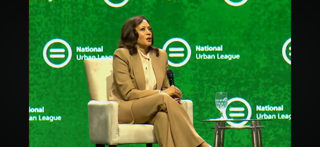
In a moment where many leaders feel the tension between silence and responsibility, the message delivered by Kamala Harris at the National Urban League Conference in Nashville offers a clear directive: be uncompromising.
Not rude. Not unlawful. But unwavering in principle.
Her remarks emphasized something deeper than policy—it was a call to integrity. The kind of leadership that tells the truth, even when it is uncomfortable. The kind that prioritizes honesty with the people, even at the risk of being unpopular.
That kind of leadership is not confined to politics. It is a standard all of us who lead should be paying attention to.
Harris pointed to critical issues shaping today’s national conversation—from expanding the courts and establishing term limits for the Supreme Court, to rethinking electoral districts and advancing statehood for Washington, D.C., and Puerto Rico. She underscored the importance of refocusing attention on the judicial branch, especially in a time when its influence is deeply felt but often underexamined.
At the heart of it all was a values-based call: to center equality, justice, fairness, and freedom—not just as ideals, but as expectations.
There was also a clear-eyed acknowledgment of the current landscape. The path to restoring voting rights may not be immediate. Progress may be slower than many hope. But that reality is not a reason to disengage—it is a reason to become more focused, more strategic, and more committed.
Because if there is one thing this moment requires, it is participation with purpose.
As we look ahead to the midterm elections, the charge is clear: vote with conviction. Vote with passion. Send a message not just through opinions, but through action.
And beyond the ballot, invest in the ground game. Encourage others to vote. Support efforts that increase access and turnout. Stay informed. Stay engaged.
This is what being “uncompromising” looks like in practice.
It is not about agreeing on every policy or political strategy. It is about refusing to be passive in a time that demands presence. It is about choosing to lead with integrity, even when it is inconvenient. It is about standing firm in the belief that leadership—at every level—should protect people.
Because ultimately, the strength of any system depends on the people willing to participate in it, shape it, and hold it accountable.
And in this season, sitting on the sidelines is no longer leadership.


 motivather





 Writer